Menu




Menu


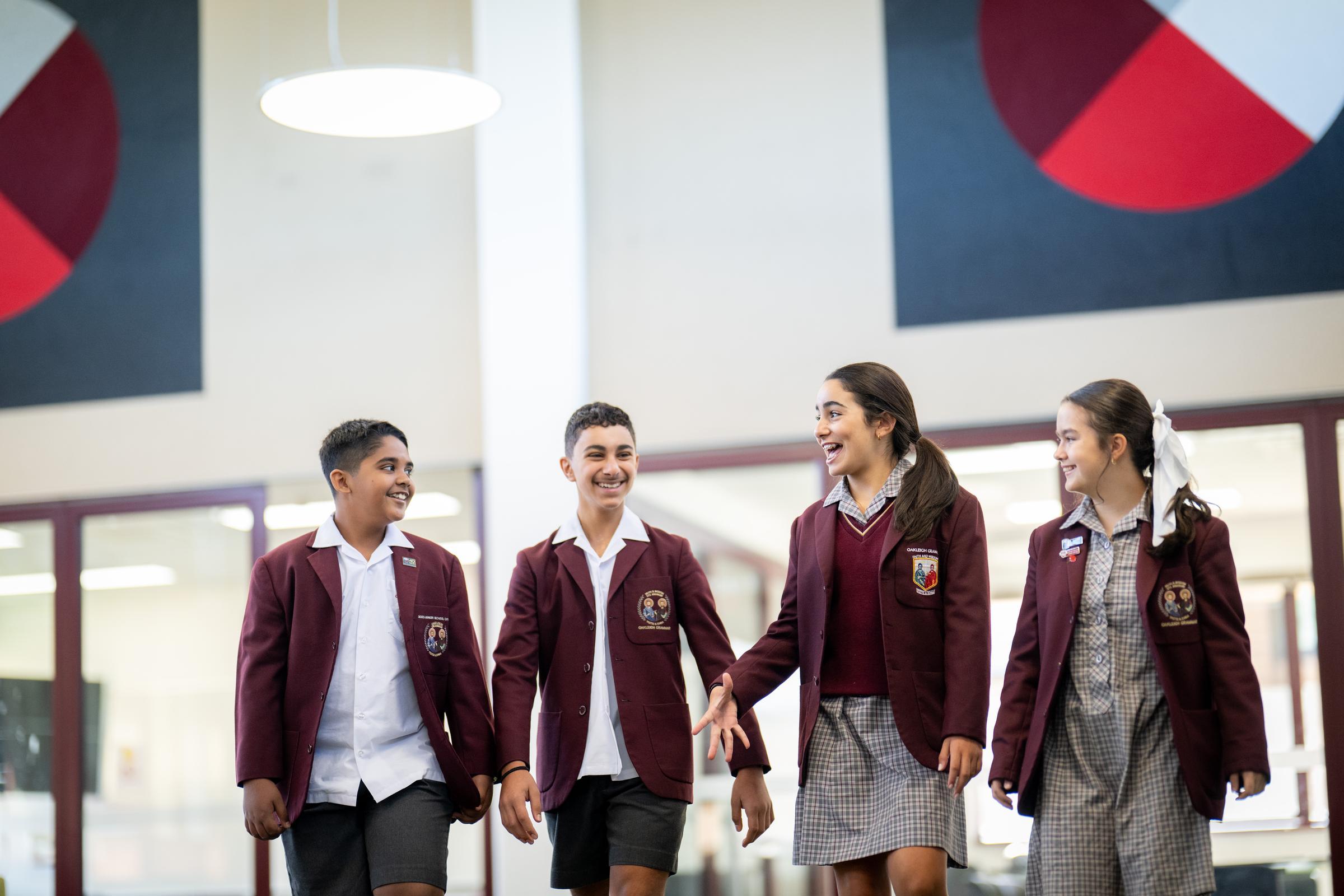


Respect is central to a safe, positive school environment. As students in Years 6–9 develop more independence, they are learning how their words, actions and choices affect those around them.
We continue to encourage respectful behaviour towards peers, teachers, staff and the wider school community — speaking appropriately, listening to others, following instructions, respecting personal space and belongings, and treating others with kindness.
Disagreements and conflict are a normal part of school life, and they offer valuable opportunities to build communication, problem-solving and resilience skills. We encourage students to try resolving minor issues respectfully first, and to seek help from an appropriate adult when needed.
Families play a key role in helping to reinforce and model these expectations also. Conversations about respectful communication, appropriate language and taking responsibility for one's actions makes a real difference and build life long skills.
Together, we can build a community where everyone feels valued, safe and respected.
Ashlee Scott
Middle School Pastoral Coordinator

At Oakleigh Grammar, we have been actively discussing the impact of Artificial Intelligence (AI) on education and what its rapid development means for teaching, learning and assessment.
The School developed guidelines for the use of Generative AI (GenAI) in 2025. Given the pace at which this technology is evolving, these guidelines are reviewed annually. This year’s review has recently concluded following robust discussions among our teaching staff, with a particular focus on learning and assessment.
GenAI has enormous potential as a learning tool. However, it also presents the risk of cognitive offloading, allowing technology to do the thinking students need to do for themselves. Our position is clear: AI can support learning, but it should never shortcut learning.
As part of this year’s review, teachers audited learning tasks and assessments that may be particularly vulnerable to GenAI. Our approach emphasises making student thinking visible and gathering evidence of learning throughout the process, rather than relying solely on a final product. This may include drafts, discussions, oral explanations, reflections, process journals and supervised tasks. These approaches help ensure that assessment remains an authentic and trustworthy reflection of student understanding.
For our students, the message is simple: be the content creator, not the content imitator.
Our next step will be to provide more student-friendly education about AI, including clearer guidance on appropriate use, academic integrity and how GenAI can extend rather than replace thinking.
Technology will continue to evolve, and so will our approach. What will remain constant is our commitment to developing curious, creative and responsible learners who can confidently say: this thinking is mine.
Guang Wu
MYP Coordinator